Tatsuma Takeda: Following the Undercurrent
Reconstructing the Archaeology of Memory
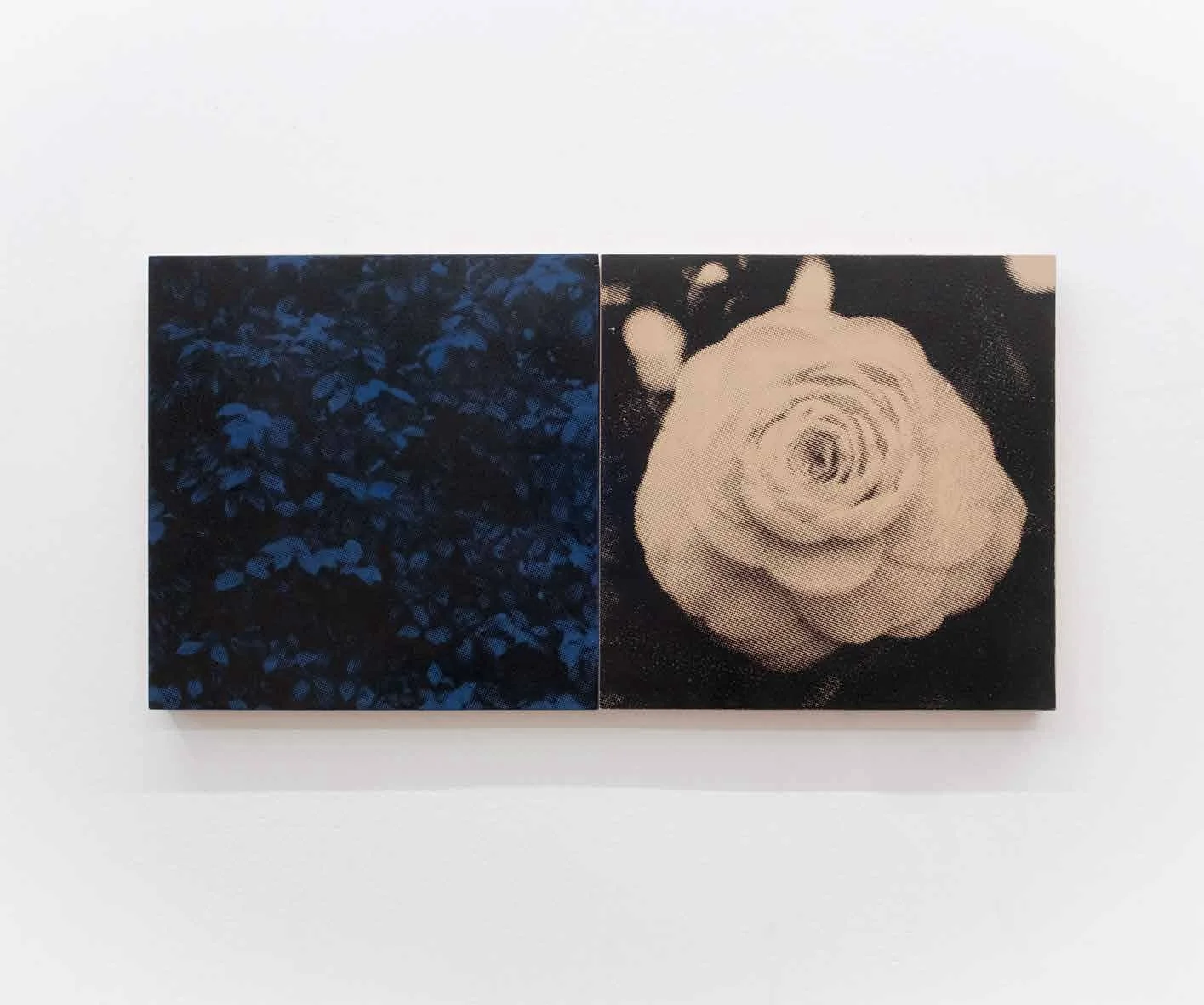
Halftone #44, 2024 Lacquer on wood panel, screen print 30 × 30 × 3 cm each (set of two)
Tatsuma Takeda (b. 1988, Amakusa District, Kumamoto Prefecture, Japan) was born in a region that has been home to hidden Christians (Kakure Kirishitan) since Japan's Edo period. This distinctive religious history first sparked his interest in the movement, exchange, and transformation of faith and culture.
Now based in Berlin, Takeda works from an anthropological foundation, employing painting, three-dimensional video, installation, and other media to uncover new perspectives from which to interpret the historical evolution of humanity and art — through the interplay of identity and difference within today's pluralistic contexts.
In 2020, Takeda received his Master's degree from the Dresden University of Fine Arts under the guidance of artist and professor Carsten Nicolai.
His work continually suggests that we look beyond a view of faith defined by competing doctrines, and instead understand it as a fundamental, shared attitude toward life. As he says: "I hope to transform this personal experience into a more universal perspective through art."
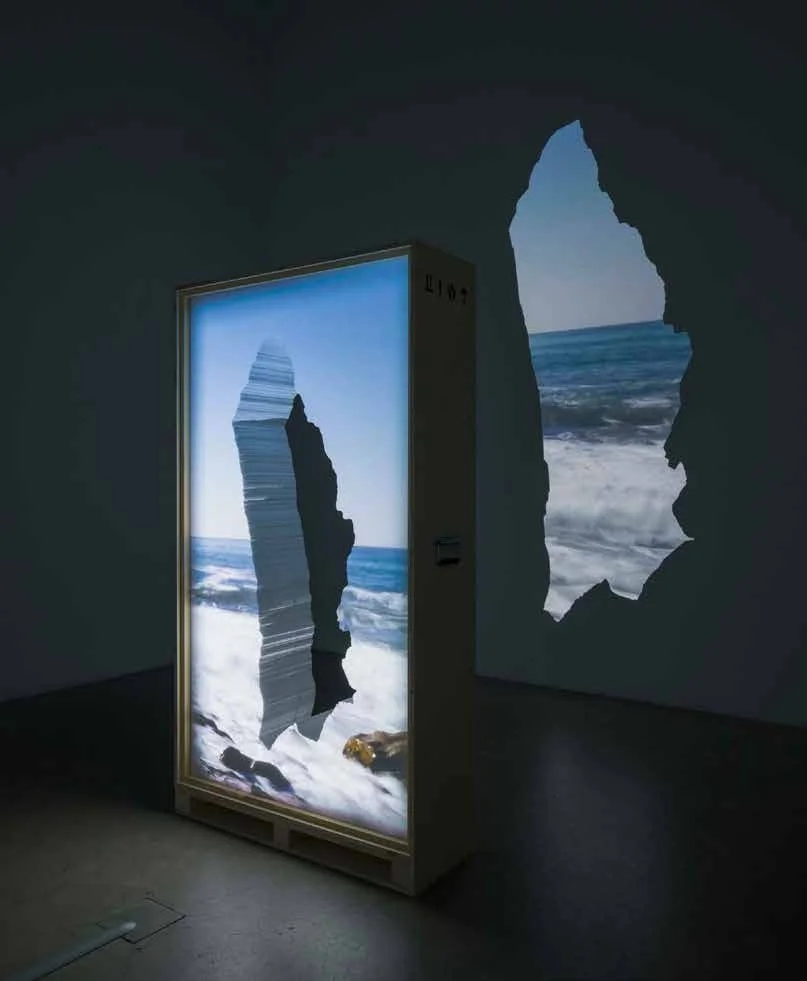
The Eye of a Needle, 2021 Wooden crate, styrofoam, video projection Dimensions variable
Inspiration for the work: the Harinomendo rock formation — a natural "needle's eye" in the rock, famed for a silhouette resembling the Madonna and Child.
The Eye of a Needle series takes its inspiration from Japan in 1868: amid the religious persecution of the Gotō Islands, more than a dozen Christians attempted to take refuge in sea caves. The rock beside the cave is known in the local Gotō dialect as "the eye of a needle" (Harinomendo), for the large opening at its center which — to the persecuted — resembled the Virgin Mary. To this day, this naturally formed mystical silhouette retains a powerful energy for believers and non-believers alike.
The series was also featured in the Winter 2025 issue of ArtReview Asia — a mark of the growing attention Takeda's work is receiving from the art world's academic and critical circles.
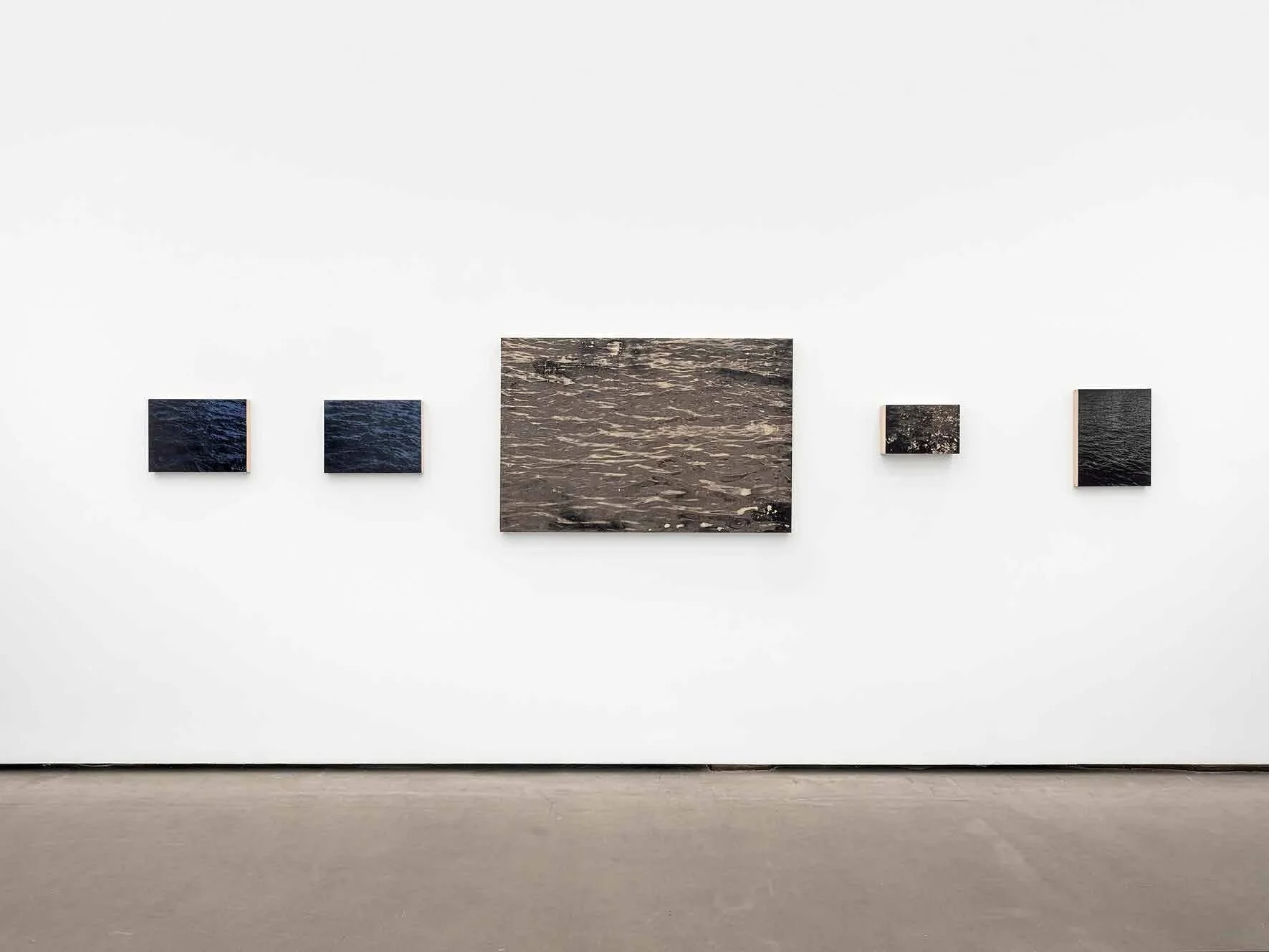
Halftone series, 2023 Installation view of Be Water, Eigen Gallery, Berlin (Courtesy of the Artist and the Gallery)
Takeda's approach is almost archaeological: he is drawn to excavating and reanimating specific, hidden junctures of history, while remaining firmly engaged with the present. He believes fluidity is the cornerstone of modern society — and this fluidity is the central theme of his artistic practice.
The Halftone series draws its inspiration from the Age of Navigation in the 16th century, when lacquerware travelled as trade goods from Japan to Europe along multiple colonial routes. Lacquer served not only practical functions such as protection and decoration, but was also used as an adhesive — in the art of kintsugi, for example — and can thus be extended into an understanding of the medium as one that connects and merges different cultures and nations.
In his practice, Takeda often incorporates visual imagery of landscapes and "imported objects" — elements that have played a crucial role in shaping contemporary culture. By interweaving historical context with personal memory, the works aim to highlight both the common language that exists in today's pluralistic society and the essential differences rooted within it.
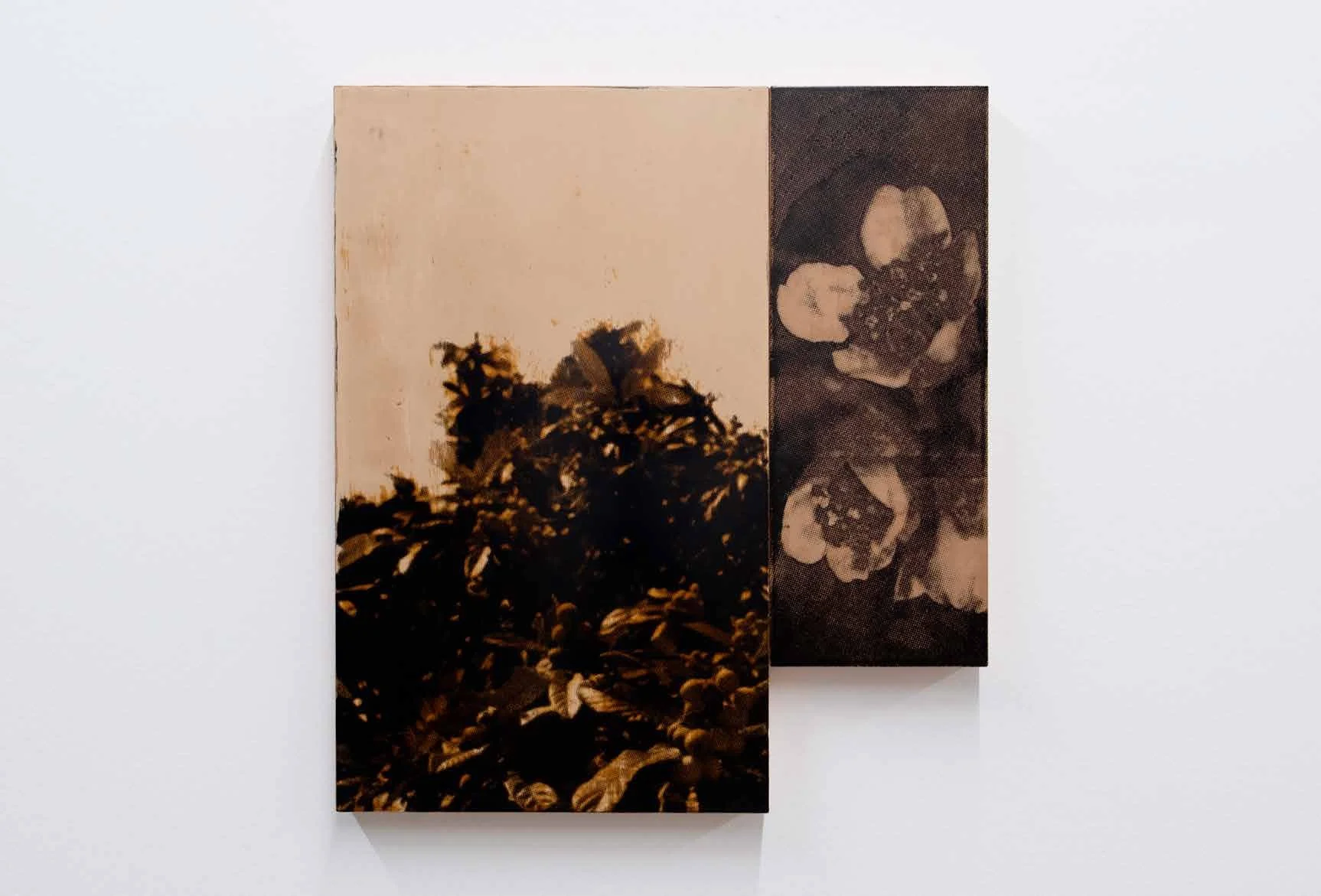
Halftone series #49 - Loquat, 2025 Lacquer on wood panel, screen print 50 × 30 × 3 cm & 40 × 15 × 3 cm (set of two)
His residency in Portugal prompted him to reflect on how the camellia, a plant typically native to East Asia, became famous in Europe after its introduction and once served as a symbol of cities such as Porto. The movement of such "imported objects" also works in reverse: figs, for example, originated in the Near East and spread to the Mediterranean region in ancient Roman times, where they were beloved and highly prized; only in the 16th century did they return to the Far East and come to be widely cultivated. One of the most famous crops on Amakusa Island is the fig.
During a visit to Tatsuma Takeda's studio, SAC recorded the following conversation:
SAC: What is your primary medium? What special significance does it have for your work?
Takeda: I mainly use lacquer and lacquer screen printing, and I also make video art. Lacquer is a medium with a strong sense of history, and it also allows me to combine traditional and experimental forms of expression.
SAC: Where do you draw inspiration for your work?
Takeda: Inspiration comes from history and cross-cultural exchange. For example, I photographed camellias in Portugal; they originally came from East Asia, and this process of migration is like the flow of culture. I am also influenced by my color blindness, which makes me more sensitive to light and dark and to yellow, resulting in a distinctive approach to image processing.
SAC: As an artist from Amakusa Island, how has this historical background influenced your art?
Takeda: Amakusa was a refuge for hidden Christians, and this history shaped my sensitivity to identity and cultural migration. I hope to transform this personal experience into a more universal perspective through art.
SAC: How do you view Berlin's art environment?
Takeda: Berlin remains an important platform. Although it is more challenging than in the past, it offers opportunities for experimentation and exchange. I hope to continue developing here while maintaining close ties with art networks in Asia.
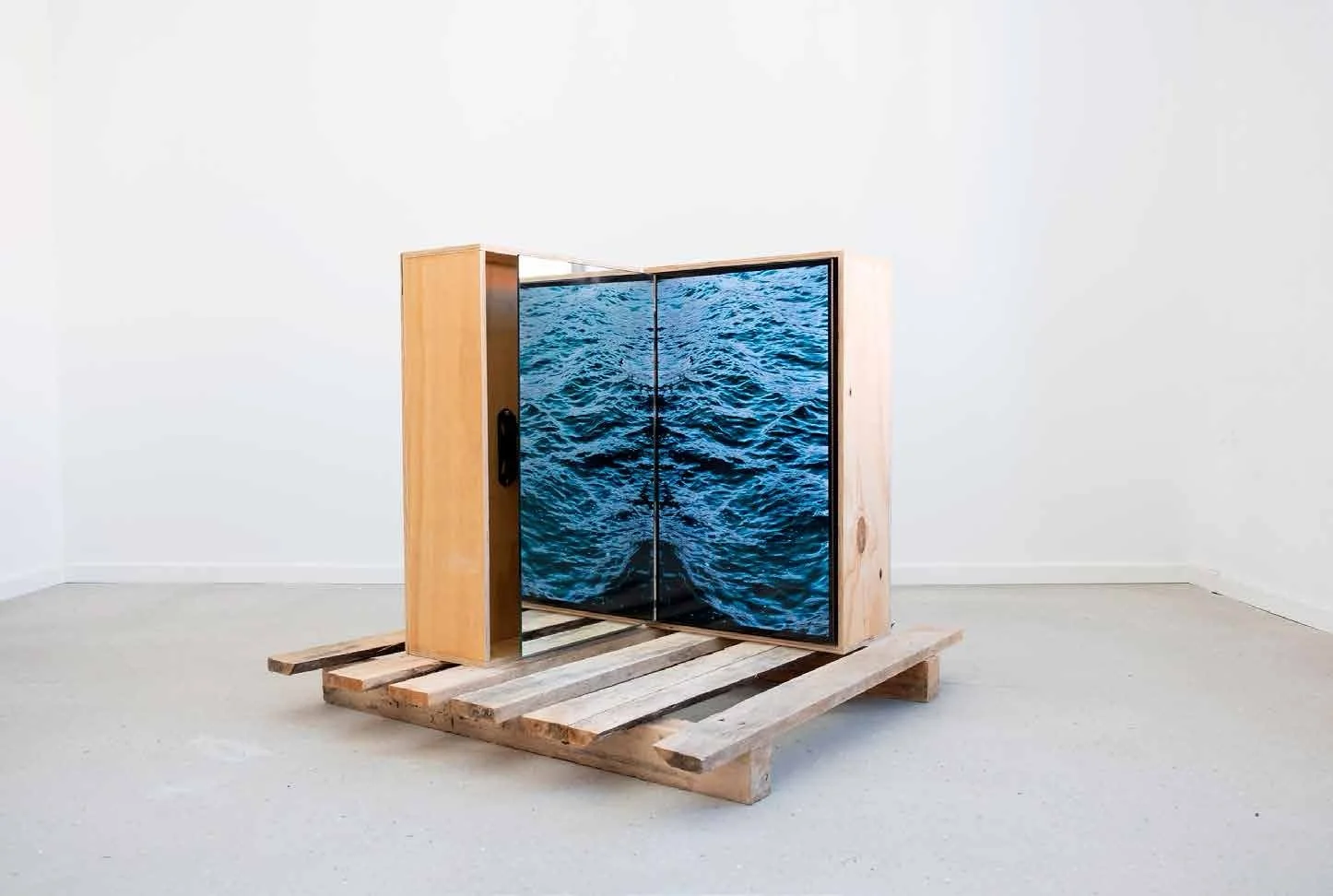
Untitled, 2025 Wooden box, monitor (video), mirror, and wood panel, dimensions variable
Takeda has held solo exhibitions at Kunstquartier Bethanien in Berlin, Cité Internationale des Arts, motomoto AIR in Kumamoto, Japan, and other venues. He has also participated extensively in group exhibitions worldwide. Selected credits include Kunstmuseum Luzern, Switzerland (2018); the Japanese-German Center Berlin (2014); the Museum of Contemporary Art Tokyo (2011, where he won and exhibited in "TOKYO WONDER WALL"); and the 21st Century Museum of Contemporary Art, Kanazawa, Japan (2021, selected for the museum's collection exhibition "Inner Cosmology"). His work has also appeared in major exhibitions such as "Shell Artist Selection 2020" at The National Art Center, Tokyo, and "VOCA 2021" at The Ueno Royal Museum.